Thursday, June 27, 2013

ACFODE Monitoring Activity Reveals Increased Citizen Ability to Hold Leaders Accountable in Lango Sub Region

In a bid to assess the impact realized by the activities of one of its projects titled “Promoting Good Governance and Gender Accountability at Local Government Level”, ACFODE conducted a monitoring visit in the Lango sub region between 20th-22nd may 2013.  The exercise covered the project districts of Apac, Oyam and Kole and engagements were held with district leaders, civil society actors and community members.

A community member from Oyam sharing the benefits of the
 civic education trainings in Ngai subcounty Kula Kula  Parish
The three year project that kicked off in June 2011 aims at contributing towards the realization of increased knowledge and awareness among elected leaders at local government level of their roles and responsibilities as well gender accountability issues; enhanced capacity of civil society actors to advocate for good governance and gender accountability at local government level and conduct grassroots civic education; and improved mechanisms of increasing national and local awareness and commitment to principles of good governance and gender accountability in society.

ACFODE has successfully conducted a number of activities under the project, including; Training of District Councilors on their roles and responsibilities in promoting good governance and gender accountability, Training of Trainers (TOTs) for civil society actors, review meetings with District Councilors and Technical Personnel as well as refresher trainings for CSO actors.
As a result of these interventions, a number of positive outcomes have been realized. These include;
  • Increased knowledge of roles and responsibilities among elected leaders and community members.
  • Increase in communities' demand for accountability from district leaders.
  • Increased female representation in District Council Committees.
  • Increased participation of female Councilors during council sessions.
  • Increased access to government development programs by community members.
According to Mr. Akwang Nicholas the Apac Community Development Officer (CDO), “As someone on the ground, when the project started the main issue was increased women representation and lack of awareness by local leaders of their roles and responsibilities to society. Women Councilors did not take up top places of leadership but after the training, they agreed to elect a new chair person who is a woman, and currently all the 4 chair persons of the council are female. One of them is also a youth. “It is now evident that leaders are aware of their roles since the meeting with ACFODE occurred.”

As a sign of approval of the ACFODE interventions, the stakeholders including civil society actors, community members and leaders in Apac district vowed to extend the work of promoting good governance and gender accountability to sub counties within the region that ACFODE is yet to reach.

Compiled by:
Nancy Nandudu
Public Relations and Communications Officer

Action For Development

Friday, May 24, 2013

ACFODE Conducts Regional Training Workshops for District Women Councilors


With the existing need to progress away from increased numbers of women in political leadership to their enhanced participation, Action For Development (ACFODE) in partnership with the Women’s Democracy Group (WDG) conducted two regional trainings in Lira and Rukungiri districts for district women councilors from the 13th-15th of May 2013. WDG is a consortium of five women organizations which include Uganda Women's Network (UWONET), ACFODE, Women’s Democracy Network (WDN) - Uganda Chapter, Forum for Women in Democracy (FOWODE), and Center for Women in Governance (CEWIGO).

 An interactive session during the training workshop in Lira District

The trainings, which were conducted in Lira and Rukungiri districts brought together 74 district women councilors from Amolatar, Dokolo, Lira, Oyam, Rukungiri, Kisoro and Kanungu. The aim of the exercises were to increase the skill sets and knowledge base of the female leaders to effectively engage in council and influence decision making processes. They also sought to empower the officials to form caucuses for the advancement of women issues in local councils to enhance gender responsiveness.

Accordingly, during the trainings, participants were taken through topics on gender and gender responsive budgeting, lobbying, advocacy and networking, monitoring and evaluation of government programmes, e-communication with an emphasis on usage of bulk SMS to communicate with the electorate, Legal frameworks for affirmative action, caucusing and the rules of procedure in council.

The topics of engagements were based on a rapid assessment carried out by WDG in December 2012 which indicated that many local women leaders were challenged with inferiority complexes, which were rated at 100%; lack of advocacy and lobbying skills, which scored 94%; poor planning and budgeting skills and lack of knowledge on government policies, which claimed a score of 79% and ignorance of their roles and responsibilities which came in at 74%. Other skills gap established included: poor public speaking ability, limited skills in gender mainstreaming and gender budgeting, unawareness of the correct way of making ordinances, as well as inaccessibility of modern research and new tools of information to enhance their contribution to decision making.

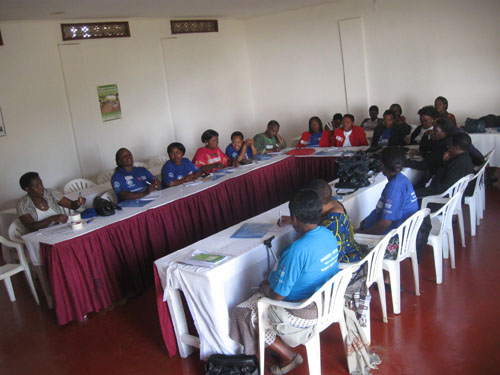
A cross section of Women councilors during the workshop in Rukungiri district

The training resulted in the formation of seven district women caucuses, which were representative of the participating districts. The caucuses were formed uniquely on the basis of advocacy issues that affect majority of the communities they represent, rather than on the basis of political party affiliations. The groups were able to make immediate progress in their varied capacities by developing advocacy strategies on urgent issues that need redress, thus drawing closer to achieving remarkable milestones in their respective communities.

The women councilors appreciated the three-day engagement as a timely intervention which equipped them with tools for better leadership and replication of knowledge and skills gained. One of such councilors remarked “We cannot take this training for granted;  We appreciate the quality training and indeed it has helped a lot and we expect to perform better in undertaking our roles as women councillors.’’

Compiled by:

Nancy Nandudu
Public Relations and Communications Officer
Action For Development

Friday, April 26, 2013

ACFODE Launches a New Project to Promote Positive Socio-Cultural Practices in Apac District


ACFODE, with support from the Swedish Cooperative Centre (SCC) a non-profit organisation that offers support to self-help development initiatives, cooperatives, farmers' organisations and informal groups in developing countries, has rolled out a project titled “Strengthening Formal and Informal Institutions to Promote Gender Responsive Social Cultures in Uganda.”

The one-year pilot project, which will be conducted in Apac district in northern Uganda, will seek to engage leaders from both formal and informal institutions as well as communities in the promotion, establishment and application of gender responsive social cultural practices which facilitate gender equality.

Despite the fact that Uganda has made significant progress in eliminating discrimination against women and girls through the enactment of gender sensitive laws such as; the constitution, the Domestic Violence Act and the Child Protection Act, as well as the ratification of international protocols like the Maputo Protocol, CEDAW and ICGLR, the vice largely continues to persist. Coupled with a general lack of awareness among duty bearers about the related laws as well as the absence of effective mechanisms for the enforcement of such laws, their effective enforcement within communities remains a challenge. 

The new project will therefore employ a fresh perspective on the intervention, which will focus on highlighting the importance of boys and men as champions in the elimination of negative socio-cultural practices which promote violence against women. The premise of the project's focus is the fact that a balanced society is one in which both male and female actors are aware of each other's worth and equally respect each other.

Working alongside partners in the east African community, that is, GROOTS and Men for Gender Equality Now (MENGEN) in Kenya and Tanzania women lawyers association (TAWLA) in Tanzania, the project will utilize innovative methods of intervention with the different stakeholders in the communities in Apac district.  

ACFODE therefore calls upon all citizens of Uganda to work together in order to achieve a society where male champions for gender equality can successfully lead the way in the development of a national movement that appreciates the capacities, potential and rights of women and girls.

Compiled by:

Nancy Nandudu
Public Relations and Communications Officer
Action For Development (ACFODE)
Saturday, April 6, 2013

ACFODE Intra University Debates Move to South Western Uganda


In its campaign to empower young people with skills in discussing topical issues on good governance and democracy, ACFODE in partnership with Konrad Adaneur Stiftung (KAS) conducted intra university debate competitions in Kabale University. The two-day activities that aimed to select a representative for the western region at the national inter university debate championships in Kampala kicked off with a debate training workshop for the students on April 6th 2013.


Under the theme, "Youth Spearheading gender equality and good governance in Uganda," the training workshop targeted students from various faculties, including; Arts, Social Sciences and Education with lessons in gender and gender roles, emphasizing the need for promotion of equity for the sake of sustainable gender equality. Professor Aggrey Yesigomwe from the department of Development Studies at Kabale University, who led the participatory session, remarked on the ideal type of gender equality that women strive for, in an effort to differentiate between gender equality and equity. 

The training session on good governance and democracy, which preceded an introduction to the British Parliamentary debate format, focused on developing the students' awareness of the concepts of human rights, privileges and obligations of stakeholders in the practice of democracy and the consequential achievement of good methods of governance.

Some of the contentious questions raised during these highly participatory sessions included matters of discriminative gender roles, the misuse of affirmative action for women as well as the rising marginalization of men in gender discussions.

The workshop was crowned with a trial debate in which the students utilized their newly learned skills in the British Parliamentary format of debate to argue the motion, "This house would abolish the women's seat in parliament." The mock debates were held in preparation for debate competitions, to be held on 7th April.

Compiled by:
Nancy Nandudu
Public Relations and Communications Officer
Action For Development

Friday, March 22, 2013

Acfode Strengthens The Capacity Of Kisoro District Stakeholders In The Fight Against Sexualized Violence


ACFODE with support from EIRENE carried out an annual self assessment workshop and process monitoring session in Kisoro district from March 18th to 21st 2013 with the aim of strengthening its project on the prevention of sexualized violence against women and girls in Kisoro district. The project is being implemented in Nyarusiza, Nyakabande, Busanza and Kirundo subcounties of Kisoro district.

The one day workshop, which was part of the monitoring framework to ensure sustainability and build strong networks in the district saw 60 stakeholders in the district come together and deliberate on sexual violence issues and how the project procedure can be improved in the district.

The proceedings generated feedback from stakeholders in the community project. For instance, the Asst. Chief Administrative Officer (CAO) Ms Rita Byirinbiro expressed gratitude for ACFODE's project interventions, stressing the need for other actors to unite and play their roles so as to ensure the project is a success. It was also noted that ACFODE is one of the longest serving partners in the district and has therefore been responsible for a large percentage of the current political, social and economic change in the area.

The District Community Liason Officer Mr. Ben Wenamanya highlighted the availability of free counseling services for victims of sexual violence available through the ACFODE offices, as well as easily accessible referral system for reporting sexual violence cases via the ACFODE Community Facilitators (CFs).

In addition, the Sub County Chief of Nyakabande emphasized the support of several re;event Community Based Organizations through ACFODE's work. For instance, Kichwumbi Community Development Association, which supports young girls to become economically independent.

The positive impact of the Combating Defilement, Rape and Sexual Harassment (CODERASH) committees was also affirmed through visits to the local communities, which were more aware of sexual violence through their regular dialogues and interaction with the ACFODE CFs, who are also part of the local communities.

A total number of 120 CFs have been trained in the four sub counties and, with support from the ACFODE field office, they are able to sensitize communities on sexual violence, reproductive health and economic empowerment and also refer Gender Based Violence cases to relevant authorities.

The communication channels used in dissemination of ACFODE information were also monitored in order to determine their impact and relevance in the project implementation. With only two local radio stations; Kisoro FM and Voice of Muhabura FM, ACFODE's sensitization messages on sexual violence in communities have been largely welcomed, which was evidenced by the fact that 4 people out of 10 in any given community have listened to these talk shows.

Overall, local authorities, including the district LCV Chair Person pledged to offer more support to ACFODE to ensure that the marked reduction in sexual violence in the district since the beginning of the project continues. This has been a big milestone for ACFODE as an organization in the district, in regard to the fight against sexual violence.

Compiled by:

Andrew Ssekirevu
Programme Assistant
Gender and Economic Policy Department
Action For Development