Thursday, June 27, 2013

ACFODE Facilitates the Formation of Favourable School Policies to Promote a Conducive Learning Environment for School Girls in Kisoro District

ACFODE with support from EIRENE and BMZ conducted trainings on Sexual and Gender Based Violence (SGBV) in 21 schools in Kirundo and Nyarusiza Sub-Counties of Kisoro district from 18th to 21st June 2013. The trainings, which were attended by 42 selected primary school teachers and two nursing officers from Kisoro District Hospital, aimed to equip the crucial gate keepers of societal change with skills in prevention and handling of cases of SGBV. From Senior Women and Men teachers and patrons of school clubs like music, dance and drama or debate to medical attendants, the interactive sessions reached varied target groups with resourceful information on sexual violence, basic child counselling skills and peer education programmes.

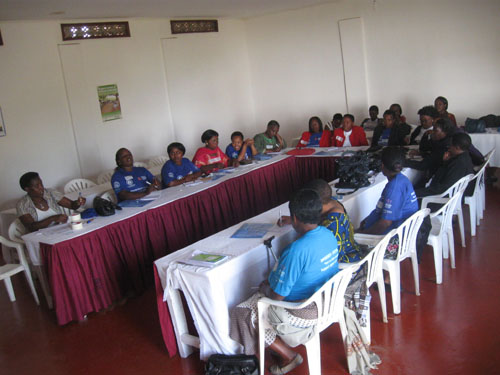
Teachers from one of the participating schools formulating
action plans to handle SGBV 
Participants benefitted from group discussions, through which various roadblocks to erasing SGBV in schools were identified, such as; sexual favours in reward for marks from teachers, parental negligence, poverty, adolescence, and ignorance. The teachers, who alleged that the high school dropout rates were majorly caused by sexual violence, also learned how to offer psychological support to survivors of sexual violence acts who suffer the brunt of STDs, early pregnancies, teasing, name calling from peers and community members, among others.

In an effort to strengthen the cohesiveness of the project, the participants were introduced to the Community Facilitators of ACFODE's Combating all forms of Defilement, Rape and Sexual Harassment (CODERASH) committees in the area. These committees comprised of community members that were trained by ACFODE on prevention and handling of SGBV cases have been critical in sustaining the project impact at local levels through awareness creation and the strengthening of referral pathways in the fight against SGBV. The committees' efforts were appreciated through the awarding of t-shirts and badges, and they were encouraged to mentor and support the training participants in the effective implementation of their school advocacy activities.

As a result of the training sessions, the participants were able to develop action plans, which included initiatives such as; establishing and/or strengthening the efficiency of school disciplinary committees, creating help desks to facilitate the reporting of violence cases, utilization of official occasions such as school assemblies and PTA meetings to sensitize teachers, students and parents about SGBV and introduction of peer to peer education programmes, among others.

Compiled by:
Nancy Nandudu
Public Relations and Communication Officer

Action For Development

ACFODE Facilitates the Formation of Women Farmers Food Security Groups to Tackle Household Food Insecurity

Women and farming are two words that have over the years become synonymous because women have made significant contributions to the agricultural sector in Uganda. It is unfortunate that despite their considerable contributions, they still suffer the biggest impact and burden of household food insecurity. Mothers often watch helplessly as their children suffer or even die of preventable plagues such as malnutrition and starvation. Food insecurity has also contributed to high levels of domestic violence in homes as couples struggle to meet all household needs, including food, on meagre resources.

Participants discussing the obstacles to the full attainment
of food security in their communities
It was out of this pertinent concern that ACFODE under the project Building and Amplifying Women’s Voices in Economic and Political Development undertook trainings on farmer group formation for women farmers from the districts of Dokolo, Pader and Namutumba from 17th to 21st June. The objective of the group formation is to accelerate the process of the women farmers accessing government programmes, since extension services such as NAADS are mostly made readily available to farmer groups. Similarly, the women farmers can benefit from other networks like District Farmers associations, Non- Governmental Organisations and development partners whose emphasis is agriculture and food security.

Through these avenues, advisory extension services or inputs may be availed to the farmers in order to add value to their produce, thus facilitating the creation of food secure households and reducing on the number of children and women who die from malnutrition and starvation.

The training created a platform for the women farmers to identify the obstacles to their attainment of adequate food all year round, such as; limited access to and ownership of land and other related factors of production, male domination of decision making and marketing processes, loss of soil fertility leading to low production, poor seeds, lack of storage facilities, crop pests and animal diseases, and change in weather, among others.

The women also learned the benefits of working in groups, including; better audibility due to a collective voice, cost efficiency in delivery of services, enhanced experiential learning and increased bargaining power. As a result, 18 women farmers food security groups were formed, with 6 for each district. ACFODE through the project will facilitate the groups to register with the relevant authorities within their districts.

Compiled by:
Nancy Nandudu
Public Relations and Communications Officer
Action For Development

ACFODE Conducts a Regional Training Workshop for CSO Actors in Lira District

From the 4th to 6th of June, ACFODE with support from Diakonia conducted a training workshop on good governance and gender accountability for civil society actors in Lira district, with the aim of sharpening their skills in advocacy and engagement of communities in demanding for their rights. The training, which was a follow up of the Training of Trainers (ToTs) held in 2012 brought together members of the civil society from Apac, Kole and Oyam districts.

The workshop was opened by the Speaker of Oyam district, who emphasized the need for better collaboration between civil society actors and local leaders in the struggle for attainment of rights. He also urged the participants to include interventions with cultural leaders into their activities in order for them to be more effective in their communities.

In an effort to gauge the progress of the participants in their activities, they were given an opportunity to share the issues that emerged in the process of conducting the civic education training sessions in the communities. Several positive issues were highlighted including increased community awareness of their roles as the electorate and improved community ability to identify human rights and governance gaps in their midst. On the other hand, some negative issues  emerged such as, gender disparities in property ownership and poor health services, among others.

Participants from Apac outlining the emerging issues from
 their community civic education training sessions
The two day training therefore provided sessions on effective advocacy and resource mobilization, which enabled the participants to better identify the pertinent advocacy issues in their communities that require redress. Some of the issues that were highlighted included; GBV, high school drop-out rates and limited integration of good governance and gender accountability in local government planning processes.  The participants were also equipped with skills in both on and offline methods of effective resource mobilization. In addition, they benefitted from the experiences and best practices shared by Mr. Francis Ogema, a Community Monitor with 7 years experience of supporting communities in activism and monitoring government programs. He cautioned the participants on possible intimidation in their work, advising them to work with the local leaders to minimize misunderstandings.

As a result of the rich sessions, the participants were able to draw SMART action plans for their interventions, which outlined the outstanding advocacy issues in their communities, their resource mobilization plans as well as clear indicators of success. The renewed focus and direction of their action plans, equipped each participant with the necessary tools to carry out the tasks ahead of them with efficiency.  

Compiled by:
Nancy Nandudu
Public Relations and Communications Officer
Action For Development

ACFODE Monitoring Activity Reveals Increased Citizen Ability to Hold Leaders Accountable in Lango Sub Region

In a bid to assess the impact realized by the activities of one of its projects titled “Promoting Good Governance and Gender Accountability at Local Government Level”, ACFODE conducted a monitoring visit in the Lango sub region between 20th-22nd may 2013.  The exercise covered the project districts of Apac, Oyam and Kole and engagements were held with district leaders, civil society actors and community members.

A community member from Oyam sharing the benefits of the
 civic education trainings in Ngai subcounty Kula Kula  Parish
The three year project that kicked off in June 2011 aims at contributing towards the realization of increased knowledge and awareness among elected leaders at local government level of their roles and responsibilities as well gender accountability issues; enhanced capacity of civil society actors to advocate for good governance and gender accountability at local government level and conduct grassroots civic education; and improved mechanisms of increasing national and local awareness and commitment to principles of good governance and gender accountability in society.

ACFODE has successfully conducted a number of activities under the project, including; Training of District Councilors on their roles and responsibilities in promoting good governance and gender accountability, Training of Trainers (TOTs) for civil society actors, review meetings with District Councilors and Technical Personnel as well as refresher trainings for CSO actors.
As a result of these interventions, a number of positive outcomes have been realized. These include;
  • Increased knowledge of roles and responsibilities among elected leaders and community members.
  • Increase in communities' demand for accountability from district leaders.
  • Increased female representation in District Council Committees.
  • Increased participation of female Councilors during council sessions.
  • Increased access to government development programs by community members.
According to Mr. Akwang Nicholas the Apac Community Development Officer (CDO), “As someone on the ground, when the project started the main issue was increased women representation and lack of awareness by local leaders of their roles and responsibilities to society. Women Councilors did not take up top places of leadership but after the training, they agreed to elect a new chair person who is a woman, and currently all the 4 chair persons of the council are female. One of them is also a youth. “It is now evident that leaders are aware of their roles since the meeting with ACFODE occurred.”

As a sign of approval of the ACFODE interventions, the stakeholders including civil society actors, community members and leaders in Apac district vowed to extend the work of promoting good governance and gender accountability to sub counties within the region that ACFODE is yet to reach.

Compiled by:
Nancy Nandudu
Public Relations and Communications Officer

Action For Development

Friday, May 24, 2013

ACFODE Conducts Regional Training Workshops for District Women Councilors


With the existing need to progress away from increased numbers of women in political leadership to their enhanced participation, Action For Development (ACFODE) in partnership with the Women’s Democracy Group (WDG) conducted two regional trainings in Lira and Rukungiri districts for district women councilors from the 13th-15th of May 2013. WDG is a consortium of five women organizations which include Uganda Women's Network (UWONET), ACFODE, Women’s Democracy Network (WDN) - Uganda Chapter, Forum for Women in Democracy (FOWODE), and Center for Women in Governance (CEWIGO).

 An interactive session during the training workshop in Lira District

The trainings, which were conducted in Lira and Rukungiri districts brought together 74 district women councilors from Amolatar, Dokolo, Lira, Oyam, Rukungiri, Kisoro and Kanungu. The aim of the exercises were to increase the skill sets and knowledge base of the female leaders to effectively engage in council and influence decision making processes. They also sought to empower the officials to form caucuses for the advancement of women issues in local councils to enhance gender responsiveness.

Accordingly, during the trainings, participants were taken through topics on gender and gender responsive budgeting, lobbying, advocacy and networking, monitoring and evaluation of government programmes, e-communication with an emphasis on usage of bulk SMS to communicate with the electorate, Legal frameworks for affirmative action, caucusing and the rules of procedure in council.

The topics of engagements were based on a rapid assessment carried out by WDG in December 2012 which indicated that many local women leaders were challenged with inferiority complexes, which were rated at 100%; lack of advocacy and lobbying skills, which scored 94%; poor planning and budgeting skills and lack of knowledge on government policies, which claimed a score of 79% and ignorance of their roles and responsibilities which came in at 74%. Other skills gap established included: poor public speaking ability, limited skills in gender mainstreaming and gender budgeting, unawareness of the correct way of making ordinances, as well as inaccessibility of modern research and new tools of information to enhance their contribution to decision making.

A cross section of Women councilors during the workshop in Rukungiri district

The training resulted in the formation of seven district women caucuses, which were representative of the participating districts. The caucuses were formed uniquely on the basis of advocacy issues that affect majority of the communities they represent, rather than on the basis of political party affiliations. The groups were able to make immediate progress in their varied capacities by developing advocacy strategies on urgent issues that need redress, thus drawing closer to achieving remarkable milestones in their respective communities.

The women councilors appreciated the three-day engagement as a timely intervention which equipped them with tools for better leadership and replication of knowledge and skills gained. One of such councilors remarked “We cannot take this training for granted;  We appreciate the quality training and indeed it has helped a lot and we expect to perform better in undertaking our roles as women councillors.’’

Compiled by:

Nancy Nandudu
Public Relations and Communications Officer
Action For Development